

PROTECTING COMMUNITIES, CORRIDORS, AND CRITICAL INFRASTRUCTURE
Wildfire Mitigation and Vegetation Management
Paxon’s Wildfire Mitigation and Vegetation Management programs help transmission, distribution, and pipeline operators reduce wildfire ignition risk, minimize vegetation-related outages, and maintain regulatory compliance across every mile of right-of-way. We combine risk-based planning with disciplined field execution to protect communities, infrastructure, and the environment.
Wildfire risk and vegetation encroachment are among the most significant threats to energy and utility infrastructure. A single ignition event can cause catastrophic damage to communities, ecosystems, and critical assets while vegetation-related outages remain a leading driver of service disruptions. Paxon partners with operators to design and execute integrated Wildfire Mitigation and Vegetation Management programs that address both threats. From wildfire risk modeling and fuel reduction strategies through cycle-based trimming, hazard tree removal, and real-time performance reporting, we bring discipline and data-driven insight to every phase. Our team understands the regulatory landscape, fire science fundamentals, environmental considerations, and stakeholder dynamics that make this work uniquely complex and critically important.
Resources
- Statement of qualifications: Wildfire Mitigation and Vegetation Management
- Case study: Historic Wildfire Restoration […]

What we deliver
Key capabilities

Wildfire risk assessment and mitigation planning
Fuel management and defensible space programs
Transmission and distribution ROW management
Vegetation risk assessment and prioritization
Cycle-based trim planning and execution
Hazard and danger tree identification and removal
Herbicide application programs
Regulatory compliance (NERC FAC-003, CPUC, state fire regulations)
Outage reduction analytics and reporting
GIS-based vegetation and fire risk tracking systems
Contractor oversight and quality audits
Storm and fire restoration vegetation support
Integrated vegetation management (IVM)
Environmental and stakeholder coordination
Post-fire damage assessment and recovery support

How we work
Our approach
Step 01
Risk assessment and fire modeling
We analyze historical fire data, weather patterns, fuel loads, terrain, and outage records to identify and prioritize the highest-risk corridors for wildfire ignition and vegetation-related service disruptions.
Step 02
Program design
Tailored wildfire mitigation strategies, vegetation cycle plans, fuel reduction specifications, and budget models are developed to address your system’s unique risk profile, regulatory requirements, and community needs.
Step 03
Field execution
Experienced field teams and contractor oversight ensure fuel management, hazard tree removal, and vegetation trimming are performed safely, to specification, and on schedule across all corridors.
Step 04
Reporting and optimization
Fire risk analytics, outage correlation, regulatory reporting, and continuous improvement processes drive ongoing program optimization helping you demonstrate compliance and measurable risk reduction.
Why Paxon
Client benefits
Wildfire risk reduction
Proactive fuel management, defensible space programs, and risk-based vegetation strategies that directly reduce the probability of utility-caused wildfire ignitions.
Outage reduction
Targeted, risk-based vegetation management programs that directly reduce tree-caused outages and improve SAIDI/SAIFI performance across transmission and distribution systems.
Regulatory compliance
Full compliance with NERC FAC-003, state wildfire safety regulations, and utility-specific requirements backed by audit-ready documentation and defensible processes.
Cost efficiency
Risk-based prioritization ensures Wildfire Mitigation and Vegetation Management dollars are directed where they have the greatest impact on safety and reliability.
Data-driven insight
GIS-based tracking, fire weather monitoring, outage analytics, and performance dashboards provide real-time visibility into program status, risk posture, and ROI.
Community and environmental protection
Integrated approaches that balance aggressive risk reduction with responsible environmental stewardship and proactive community engagement in high-fire-risk areas.
Proven results
Related case studies
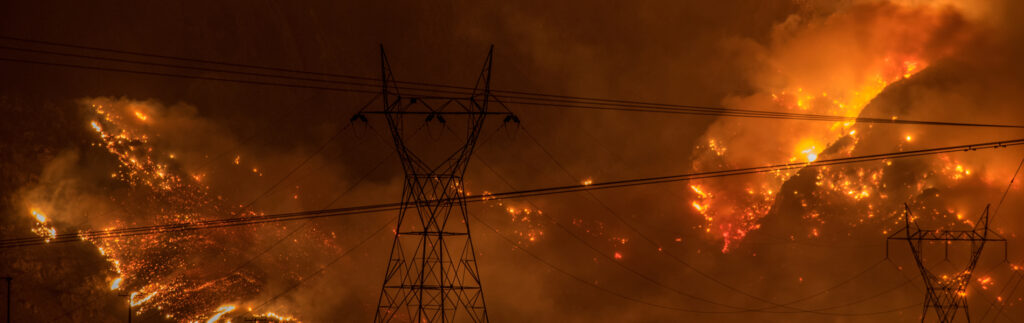
Paxon restores utility infrastructure after historic wildfire devastation
Emergency mobilization and full-scope construction management to restore utility infrastructure following devastating wildfire events.
Read case studyExplore more
Related services
Integrity Management
Comprehensive pipeline and asset integrity programs to reduce risk and extend asset life.
Construction and Inspection Management
Independent oversight and quality assurance for energy infrastructure construction projects.
Gas Recompression
Engineered Gas Recompression solutions that optimize throughput and reduce emissions.
PMO Services
Disciplined project management office services for complex capital programs.
Ready to get started?
Whether you need a comprehensive Wildfire Mitigation and Vegetation Management program or
targeted support for a specific challenge, our team is here to help.