
PIPELINE INTEGRITY | PERSPECTIVE
The understanding that disciplined field execution remains the foundation of successful pipeline cleaning and in-line inspection.
When an in-line inspection tool enters a pipeline, a successful run is based on the prework completed in the field.
For pipelines that have never been pigged, and have uncertain internal conditions or present geometry and clearance concerns, inspection readiness cannot be assumed. It has to be established through disciplined planning, based on what is known and unknown about the pipeline, a staged field execution plan, and close coordination among the operators, field teams, engineers, and the inspection vendor.
Progressive pigging provides a practical path to that disciplined approach. Rather than move directly to an inspection run, the field team advances through a deliberate sequence of clearance, cleaning, verification, and geometry work. Each pigging run helps reduce uncertainty, informs the next field decision, and prepares the line for the demands of in-line inspection. Even failures during pigging runs provide valuable information, and this progressive approach allows for stepping back to confirm results at each pigging level.
Progressive pigging is a basis for field discipline
Progressive pigging is more than a set of tools to be used during pipeline pigging runs. It is a thoughtful field process built around the conditions understood for the specific pipeline. Field crews may begin with proving clearance, which then leads to cleaning to match the operator’s specifications, then to steps that stage pigging tools to verify the pipeline, confirm geometry and bend clearance, and prepare for the inspection vendor’s requirements. The sequence should respond to what each pigging run reveals rather than force the pipeline asset into a standard pigging plan.
That distinction is especially important on exceptions to pipeline operational norms like low-flow, multi-diameter, hard-to-pig, or previously unpigged lines. The field team must manage the interface between the pipeline’s actual condition and the customer’s inspection objective. Data collected on cleaning results, debris recovery, pig condition, pressure management and control, flow stability, geometry findings, and operating constraints all become inputs to the next decision in a progressive pigging plan.
The differentiator in this approach is therefore not technology alone. It is a data-driven approach: the ability to plan and execute the work in the field, recognize what the pipeline run results are communicating through each run, and adjust the program without losing sight of safety, operational control, or the inspection objective. Intelligent field engineering supports that discipline by preserving the evidence behind those decisions, and it can be considered a truly experience-based pigging discipline.
Progressive pigging turns inspection readiness from an assumption into an actual field-verified condition for success. Digital tool run completions help preserve how that conclusion is reached and reinforce this type of planned pigging behavior based on real data.
A progressive pigging approach
Scrapers and tools used in initial runs should be more forgiving in lines that have not been pigged or have unknown characteristics and features. The following example shows how a staged program can move from the gentlest tools to the inspection run.
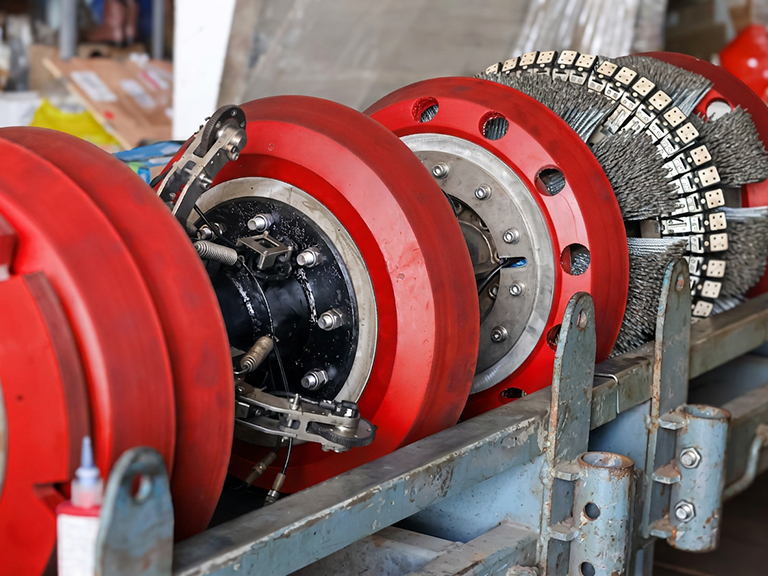
EXAMPLE SEQUENCE FOR AN UNPIGGED LINE
1 Foam wipers
1a Geometry tool: baseline run (Quantify material in pipeline)
2 Foam scrapers with bristles
2a Detergent addition
3 Mandrel scraper with cups (Detergent +)
4 Mandrel scraper with discs and brushes (Detergent +)
5 Mandrel scraper with aggressive brushes
6 Gauging tool (Use early at times)
7 Dummy tool with magnets
8 Geometry tool: clearance run
9 Metal loss tool
Note: Optional bypass ports may be added to virtually any scraper and can significantly enhance the cleaning process.
Five principles for field-led inspection readiness

1. Start with the asset, not a standard sequence
The pigging plan should reflect known operating conditions, pipeline configuration, product, flow, access, history, and inspection requirements. Where uncertainty is high, the field program should create evidence in manageable steps rather than rely on assumptions.

2. Use each run to qualify the next
Cleaning and verification runs are decision points. Tool condition, recovered material, operating response, and field observations should be reviewed before the program advances. Progressive execution helps the team control the amount of change introduced in any single run.

3. Keep field execution and engineering judgment together
The people directing field activity need access to the engineering intent, while engineers need timely, reliable information from the field. The handoff should be continuous, particularly when results require a change in tool selection, run sequence, or operating plan.

4. Coordinate inspection readiness across parties
Operators, field crews, and ILI vendors should align on acceptance criteria, tool requirements, geometry and clearance considerations, operating windows, and contingency plans. Readiness is strongest when responsibilities and decision rights are clear before mobilization.

5. Make the field record part of the integrity record
Progressive pigging creates information that can support future maintenance and inspection planning. Intelligent field engineering can connect photographs, measurements, run results, tool condition, and asset references in a structured record, helping teams retain the basis for decisions after the field work is complete.
Intelligent field engineering enables the field model
Progressive pigging remains a physical, field-led activity. Intelligent field engineering acts as an enabler. It gives the team a more consistent way to capture what happened during each run, connect that information to the asset, and make it available to the people directing the next step.
A digital workflow may bring together run plans, field observations, photographs, tool condition, pressure and flow information, geometry findings, exceptions, and approvals. The value is not the volume of data. The value is a traceable account of how the field team established readiness and why the program advanced, paused, or changed.
This also supports continuity beyond the immediate inspection. A structured field record can help establish a baseline for future maintenance planning and give integrity teams clearer context when they review inspection results, plan remediation, or prepare the next campaign.
The broader integrity lesson
Progressive pigging illustrates a broader principle in integrity management: advanced inspection depends on disciplined field preparation. The inspection technology may produce the final dataset, but field execution determines whether the line is ready to receive the tool and whether the run can be pursued with a clear understanding of conditions.
That is why field capability should sit at the center of the integrity conversation. Experienced teams can connect planning with real operating conditions, coordinate the parties involved, execute the staged program, and capture the evidence needed for engineering review.
Digital capability strengthens this model when it serves the work rather than competes with it. Intelligent field engineering should make field judgment more visible, improve traceability, and help transfer knowledge from one run to the next.
The field is the primary differentiator
Pipeline integrity depends on sound engineering, but it is proven through execution. On challenging pigging and ILI programs, the field is where assumptions are tested, conditions are verified, and the path forward is established.
Progressive pigging makes that reality visible. A staged approach can clean the pipeline to operator specifications, confirm geometry and bend clearance, coordinate readiness with the inspection vendor, and establish a baseline for future maintenance planning. The work is stepwise, practical, sequential, and responsive to data from the specific pipeline asset.
Intelligent field engineering enables the progressive pigging model by connecting the field record to engineering and integrity decisions. But the core differentiation remains the capability to execute in the field, interpret what each stage reveals, and advance the program with discipline. For difficult lines, that is what turns an inspection objective into an inspectable asset.
A question for integrity leaders: When a line has never been pigged or presents uncertain conditions, how does your team establish field-verified readiness before the ILI tool arrives?
- #PipelineIntegrity
- #ProgressivePigging
- #ILI
- #IntelligentFieldEngineering
- #AssetIntegrity
Learn about our progressive pigging service
See how Paxon Energy and Infrastructure plans and executes staged cleaning and inspection readiness programs.

Lee Shouse
VP of Engineering, Paxon Energy and Infrastructure
Lee Shouse is a degreed chemical engineer with leadership experience at Chevron and TD Williamson. He leads the engineering and technical services practice at Paxon Energy and Infrastructure, with hands-on experience across pipeline integrity, gas recompression, and field engineering programs spanning multiple states.
 lshouse@paxonei.com